

When planning a building façade, one of the most common sources of confusion is the difference between a façade consultant and a façade contractor. While both play critical roles in façade design and construction, misunderstanding their responsibilities can lead to design gaps, performance issues, and costly delays.
Whether you are working on a commercial, residential, or high-rise project, knowing who does what directly impacts façade performance, project timelines, and long-term building efficiency.
Understanding the façade consultant’s role
A façade consultant ensures that the building envelope is not only aligned with the architectural design but also performs efficiently under real-world conditions. Their work begins at the design stage and continues through technical validation and construction oversight.
They are responsible for translating architectural concepts into buildable façade systems, evaluating performance factors such as thermal efficiency and weather resistance, and selecting materials that suit the project’s climate and functional requirements. In addition, they ensure that the façade complies with relevant safety codes and energy standards while reviewing execution to maintain design integrity.
When do you need a façade consultant?
A façade consultant becomes essential when your project involves complex façade systems or performance-driven requirements.
You typically need one in situations such as:
- High-rise buildings where wind load and structural behavior must be carefully analyzed
- Projects targeting certifications like LEED (an international green building standard) or GRIHA (India’s green building rating system)
- Developments requiring regulatory approvals and detailed technical documentation
In these cases, a consultant ensures that the façade is technically sound, compliant, and feasible to execute.
Understanding the façade contractor’s role
A façade contractor is responsible for executing the façade system on site, turning engineered designs into a completed structure. Their role focuses on fabrication, installation, and coordination during construction.
They manufacture façade components such as glazing systems and panels, install them on site in coordination with other trades, and manage timelines and logistics to ensure smooth execution. Once installed, they conduct performance checks, such as water-tightness and air-leakage testing, and may also provide maintenance support after project completion.
Façade consultant vs contractor: key differences explained
The difference between a façade consultant and a façade contractor lies in their function within the project.
A façade consultant focuses on design, engineering, and performance to ensure the façade is efficient, compliant, and technically sound. A façade contractor, on the other hand, focuses on fabrication and installation, ensuring that the façade is accurately built and delivered on site.
Their involvement also differs across project stages. Consultants are engaged early in the design phase and continue through technical review, while contractors enter during construction and handle execution through installation and handover.
Why both roles matter
Both roles are essential for delivering a façade that performs effectively in real-world conditions.
A well-designed façade without proper execution can lead to installation issues, delays, or performance failures. Similarly, a façade built without proper engineering may meet visual expectations but fail in terms of energy efficiency, weather resistance, or long-term durability.
When both roles work in alignment, the façade performs as intended across design, execution, and its entire lifecycle.
Why Nexivaa is your complete façade partner
At Nexivaa, façade consulting and façade contracting are integrated into a single, accountable process. From design and performance engineering to fabrication and installation, every stage is handled with precision.
This integrated approach offers clear advantages:
- Better coordination across all project stages
- Reduced risk of miscommunication
- Consistent quality from design through execution
With experience across commercial, residential, and high-rise developments, we deliver façade systems designed for performance and built for long-term durability.
Contact us to discuss your project and explore complete façade solutions tailored to your requirements.
Make the right façade decision for your project
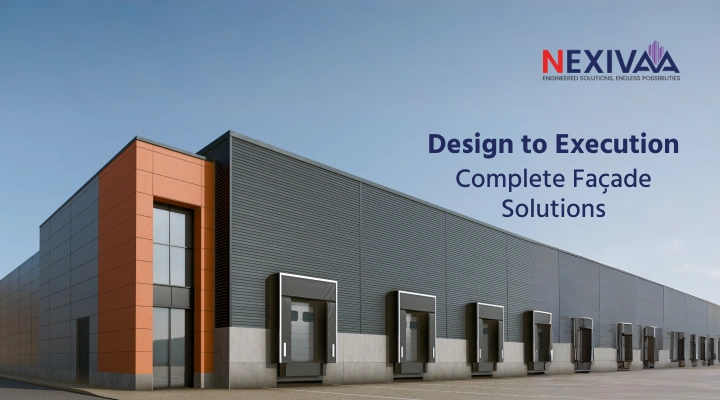
Understanding the difference between a façade consultant and a façade contractor helps you make informed decisions throughout your project.
While both roles serve distinct purposes, their coordination ensures better performance, compliance, and long-term reliability. Choosing the right expertise early can significantly reduce risks and improve project outcomes.
FAQs
1. Can a façade contractor also act as a consultant?
Some contractors offer design-build services, but consultants provide focused expertise in design validation and performance analysis.
2. Do I need both a consultant and a contractor?
For complex or performance-driven projects, having both ensures proper planning as well as accurate execution. The consultant focuses on design, performance, and technical guidance, while the contractor handles on-site implementation. This division improves coordination, reduces errors, and helps achieve the desired quality and performance.
3. At what stage should I hire a façade consultant?
It is best to involve a façade consultant at the early design stage, ideally during concept development. Early involvement helps guide material selection, system design, and performance requirements, preventing costly changes and ensuring better integration with the overall project.
4. How do façade consultants charge for their services?
Façade consultants typically charge either a fixed fee based on the scope of work or a percentage of the overall project cost. The pricing structure depends on project complexity, size, and the level of involvement required across design, review, and site support.
5. What happens if the installation does not match the design?
Consultants assess the deviation during site reviews and identify where the execution differs from the approved design. They then guide the contractor on the required corrections to bring the work back in line with specifications. This helps maintain design integrity, ensures performance standards are met, and prevents long-term issues.
6. Why choose a company that offers both consulting and contracting?
It ensures the design is executed exactly as planned, without miscommunication between separate teams. With one company handling both, coordination is smoother, decisions are faster, and accountability is clear. This leads to consistent quality, fewer delays, and a more efficient overall project.