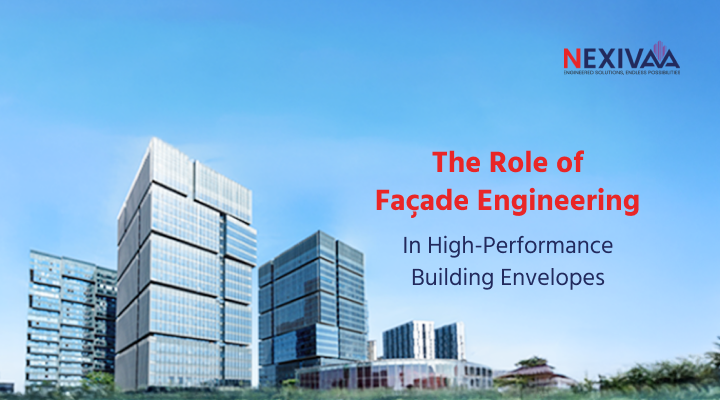
In modern architecture, a building’s outer skin is no longer just about looks; it’s a vital contributor to performance, comfort, and sustainability. Traditionally, the building façade design functioned primarily as a physical separator between the interior and exterior environments. However, modern façades are highly engineered systems that serve multiple technical and functional goals.
Advanced façade engineering services involve the integration of design, engineering, and emerging technologies to create exterior systems that perform as well as they look. Modern façades are designed to strike a balance between beauty, durability, thermal comfort, structural integrity, and natural daylighting.
Evolution of Modern Façades
The global façade market is projected to grow from USD 292.2 billion in 2024 to USD 534.0 billion by 2033, with a CAGR of 6.6%.* This growth reflects the increasing complexity and importance of building envelope systems. Today, the role of façade engineering services extends far beyond aesthetics.
Building façade design now incorporates intelligent features, such as automated shading, ventilated cladding, and solar-responsive elements, enhancing the overall aesthetic and energy efficiency. These innovations demand precise coordination among architects, engineers, and technical specialists.
Critical Functions of Modern Façade Engineering
1. Environmental Performance and Energy Efficiency
A key role of façade engineering services is to reduce a building’s energy footprint. High-performance glazing, shading systems, and ventilated double-skin façades can cut energy use by 30 to 50 percent. These solutions help regulate indoor temperatures and enhance natural lighting without increasing heat gain.
2. Structural Integration and Safety
Façade systems must resist wind loads, thermal expansion, seismic activity, and the weight of the building itself. Façade engineering companies utilize tools such as finite element analysis and computational fluid dynamics to simulate and validate the façade behavior of façades. Safety factors, including fire performance and impact resistance, are also addressed from the earliest stages of the design process.
3. Acoustic Performance and Occupant Comfort
For urban and mixed-use buildings, controlling noise without compromising airflow is essential. Acoustic insulation and ventilated design elements are used in tandem to achieve a quiet, comfortable indoor environment.
Technology in Building Façade Design and Engineering
-
Smart Façade Systems
Technologies like electrochromic glass and building-integrated photovoltaics (BIPV) enable façades to respond to changes in light, temperature, and energy demand.
-
Advanced Materials and Fabrication
Materials such as phase-change composites and parametric metal panels are utilized to enhance strength, reduce weight, and create distinctive visual textures. Digital fabrication ensures precision and efficiency.
Integrated Approach to Building Façade Design
Façade engineering services rely on interdisciplinary collaboration. BIM-based processes allow façade engineering companies to work seamlessly with architects, structural teams, and mechanical consultants. This reduces design conflicts, streamlines fabrication, and improves build quality.
Every façade system is tested for thermal, acoustic, daylight, and structural performance. Mock-ups and simulations help identify potential issues early, ensuring better construction outcomes.
Future Trends and Regulatory Demands
-
Climate Adaptation
Façades now play a critical role in making buildings resilient to extreme weather. Low-carbon materials, rain screens, and passive ventilation strategies are key elements in this shift.
-
Code Compliance
As global regulations evolve, façade engineering companies must design systems that meet higher energy efficiency, safety, and sustainability standards.
Why Partner with Nexivaa for Façade Engineering Solutions
Choosing the right façade engineering partner is crucial to achieving both creative vision and long-term performance. At Nexivaa, we offer specialized expertise to help you execute projects with precision and innovation.
- Expert façade engineering services that blend architectural creativity with technical precision
- A team equipped with international engineering experience and local project insights
- Comprehensive support across the project lifecycle, from façade design calculations to system testing
- Proven track record in delivering resilient, sustainable, and code-compliant façade solutions
- Tailored services for architects, builders, and façade contractors across India
- Focus on building façades that are future-ready, efficient, and performance-optimized
Whether you’re an architect, builder, or façade contractor, Nexivaa is your trusted partner for transforming design intent into engineered excellence.
Contact us today to schedule a call and learn how we can assist you with your next project.
FAQs
1. What is the ideal time to involve a façade engineer in a construction project?
Involving a façade engineer at the concept or schematic design stage ensures better integration of performance, cost-efficiency, and buildability into the overall architecture. Early collaboration also helps avoid costly redesigns later.
2. How do I choose the right façade engineering company for my project?
Consider factors such as experience in similar projects, expertise in local codes and climate conditions, the use of advanced simulation tools, and the ability to collaborate effectively with your design team. Ask for case studies or references.
3. Can façade engineering help reduce overall building costs?
Yes. A well-engineered façade system can lower long-term operational costs by improving energy efficiency and reducing maintenance needs. Proper detailing and optimization during design also help minimize material waste and installation errors.
4. Are façade systems customizable for different building types and aesthetics?
Absolutely. Façade systems are highly customizable in terms of materials, finishes, and performance criteria. Whether it’s a commercial high-rise or a cultural institution, façade engineers can tailor solutions to both visual and functional goals.
5. What are some common mistakes to avoid in building façade design?
Common mistakes include underestimating thermal bridging, ignoring local climate impacts, poor coordination between structural and façade systems, and a lack of testing or mock-ups. These issues can lead to failures or inefficiencies post-installation.
6. How do façade engineers ensure compliance with fire safety regulations?
Façade engineers select fire-rated materials and incorporate fire stops, cavity barriers, and compartmentation by local and international fire codes. Testing and certification of façade assemblies are often part of the design process.
7. What role does maintenance play in façade longevity?
Routine maintenance is essential to retain performance and appearance. Engineers often recommend access systems (like cat ladders or BMUs) and provide guidelines for cleaning, inspections, and repairs as part of handover documentation.