India’s skyline is changing rapidly. Major cities such as Delhi, Mumbai, Bengaluru, and Hyderabad are witnessing a surge in high-rise commercial developments that demand advanced engineering, performance reliability, and architectural sophistication. At the center of this transformation lies the building envelope.
Façade engineering plays a crucial role in ensuring that high-rise structures remain safe, efficient, and visually distinctive over decades of use.
In modern construction, façade design extends far beyond visual appeal. The façade functions as a technical system that regulates heat transfer, manages air and moisture movement, and protects the structural frame from environmental exposure. When executed correctly, a façade supports the long-term performance of commercial buildings while enhancing their architectural identity.
The role of façade engineering in high-rise construction
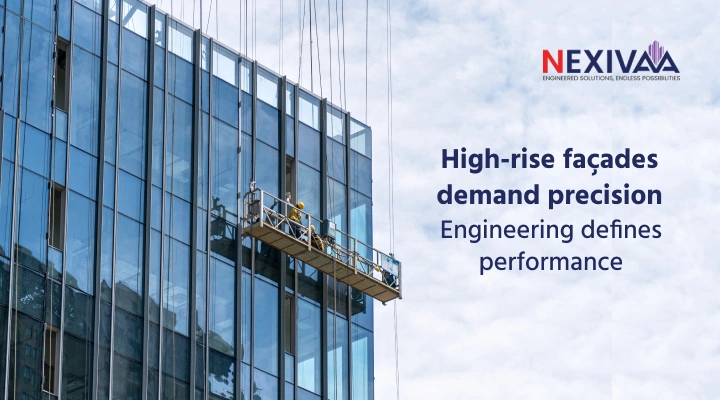
High-rise structures face greater environmental stress than low-rise buildings. Wind pressure, solar radiation, thermal movement, and structural loads intensify as buildings grow taller. Façade engineering addresses these challenges through precise analysis, material selection, and system detailing.
Architects and engineers collaborate to develop architectural façade design strategies that balance aesthetics with performance. The façade must respond to wind loads, seismic forces, and temperature variations while maintaining structural integrity.
Key responsibilities of façade engineering include:
- Structural validation of cladding and glazing systems
- Thermal and moisture performance analysis
- Wind load assessment and anchorage design
- Integration of glazing, insulation, and framing systems
- Compliance with safety and fire performance standards
Through careful engineering, façade systems become durable protective envelopes that support both functionality and architectural vision.
Performance and energy efficiency
Energy efficiency is a major concern for commercial buildings in India. High-rise offices, malls, and mixed-use developments require effective thermal control to maintain indoor comfort while minimizing operational costs.
An optimized commercial building façade design reduces heat gain, improves daylight distribution, and enhances overall building efficiency. Engineers analyze glazing ratios, shading systems, and material properties to achieve optimal performance.
Several strategies contribute to improved energy performance:
- High-performance glass façade design with solar control coatings
- Ventilated cladding assemblies that reduce heat transfer
- Shading elements integrated into the front façade design
- High-quality insulation systems within the envelope
These approaches allow modern commercial buildings to maintain energy efficiency even in hot climates.
Structural stability and safety
High-rise buildings are constantly exposed to wind pressure and structural movement. Façade engineering ensures that cladding systems remain secure under these forces.
Engineers evaluate anchor systems, panel fixings, and structural tolerances to maintain stability across the entire building height. Properly engineered façade systems accommodate thermal expansion, building sway, and dynamic wind loads.
In large developments such as retail complexes, mall façade design requires careful coordination between structural engineers, architects, and façade specialists. The goal is to maintain visual consistency while ensuring safety across large spans and complex geometries.
Reliable façade engineering reduces long-term maintenance issues and protects occupants from potential structural risks.
Architectural identity and urban impact
Commercial buildings play a significant role in shaping city skylines. Developers seek visually distinctive structures that reflect innovation and brand identity.
Modern exterior façade design allows architects to combine different materials, textures, and forms to achieve a unique visual impact. Glass, metal panels, stone systems, and composite cladding can be integrated into dynamic building envelopes.
Today’s modern façade design also prioritizes proportion, transparency, and material contrast. These elements contribute to a striking architectural presence while maintaining durability and performance.
For high-rise towers, façade engineering supports creative expression while ensuring every design element remains structurally feasible.
Constructability and long-term maintenance
Façade engineering also considers practical construction factors. A well-engineered façade system must be buildable, maintainable, and adaptable to future upgrades.
Engineers work closely with contractors to review detailing, installation sequencing, and material compatibility. This coordination reduces construction delays and prevents performance failures.
During the design stage, engineers evaluate:
- Panel installation methods
- Access systems for maintenance
- Replacement feasibility of façade components
- Durability of coatings and sealants
By addressing these considerations early, façade engineering ensures that high-rise buildings remain operationally efficient for decades.
The growing importance of specialized façade expertise
India’s commercial construction sector continues to evolve toward more complex architectural forms. Towers with extensive glazing, mixed materials, and innovative geometries require specialized façade expertise.
Professional façade engineering teams bring cross-disciplinary knowledge that combines structural engineering, materials science, environmental analysis, and construction methodology.
This expertise allows architects to implement ambitious designs while maintaining safety and performance standards.
Why Choose Nexivaa
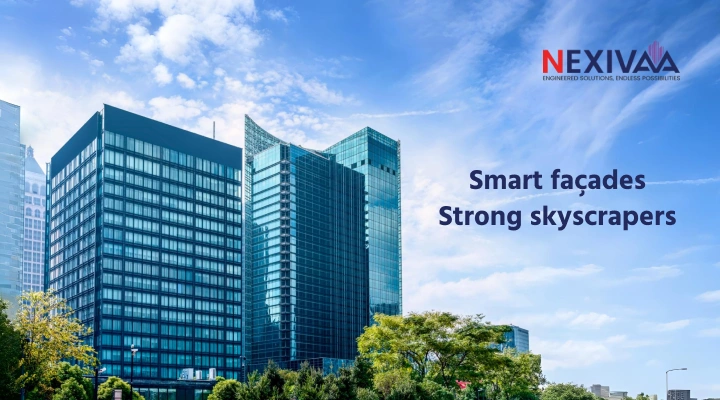
Nexivaa delivers specialized façade engineering and consulting services for high-rise commercial developments across India. Our expertise covers every stage of the façade lifecycle, from concept development to on-site implementation.
Our services include:
- Concept-driven façade design strategy for commercial projects
- Technical validation of architecture façade design concepts
- Detailed engineering for commercial façade design systems
- Structural and thermal analysis for glass façade design assemblies
- Performance optimization for commercial building façade design
- Material evaluation and detailing for exterior façade design systems
- Technical support for large-scale mall façade design projects
Our team focuses on precision engineering, alignment with compliance, and long-term building performance. Every façade system is developed to meet structural requirements, environmental conditions, and architectural intent.
Ready to elevate your high-rise commercial project with expert façade services?
Partner with us today and ensure your building envelope delivers performance, durability, and architectural excellence.
FAQs
1. Why is façade engineering important for high-rise commercial buildings in India?
Façade engineering ensures that building envelopes perform effectively under structural and environmental conditions. High-rise buildings experience strong wind pressure, thermal expansion, and varying weather conditions. Proper engineering ensures that façade systems remain stable, safe, and energy efficient. It also supports architectural design while maintaining compliance with safety standards.
2. How does façade engineering improve energy efficiency?
Façade engineering optimizes glazing ratios, insulation systems, and shading strategies to reduce heat gain and improve indoor comfort. Engineers evaluate materials and system configurations to enhance thermal performance. This approach lowers cooling loads and reduces energy consumption in commercial buildings.
3. What challenges do high-rise façades face in India?
High-rise façades face challenges such as wind pressure, intense sunlight, temperature fluctuations, and air infiltration. Engineers must ensure that façade components accommodate structural movement while maintaining airtight and watertight performance. Proper detailing and testing help address these challenges.
4. What role does glass play in modern commercial façade systems?
Glass is widely used in modern commercial buildings because it enhances daylight and architectural transparency. High-performance glazing systems improve thermal control and reduce solar heat gain. Engineers design glass façade systems with structural supports, coatings, and insulation to maintain performance and safety.
5. How can professional façade consultants support commercial projects?
Façade consultants provide technical expertise during the design and construction phases. They analyze system performance, review materials, and coordinate with architects and contractors. Their involvement helps prevent design conflicts, improve building efficiency, and ensure long-term façade reliability.