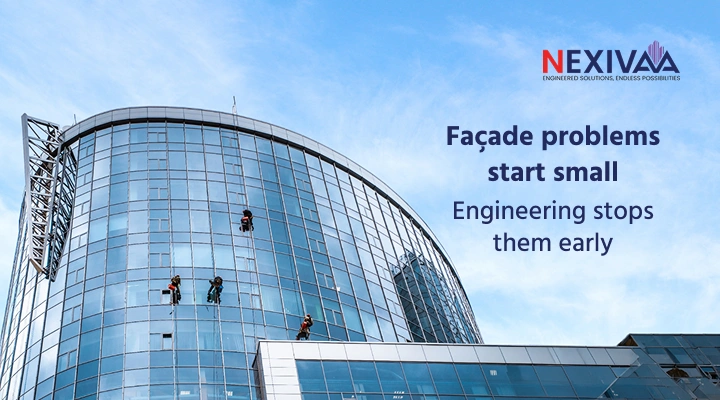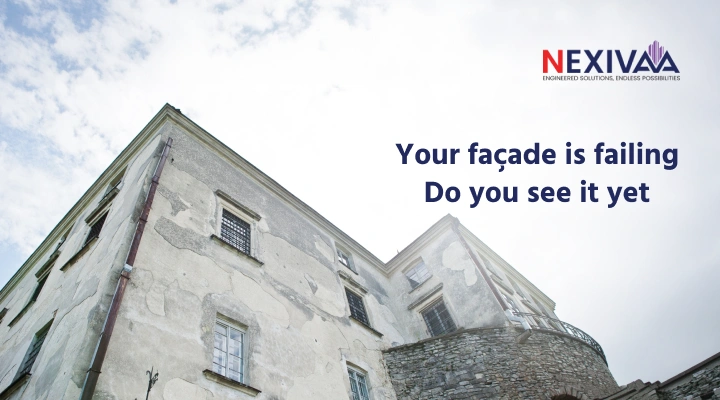
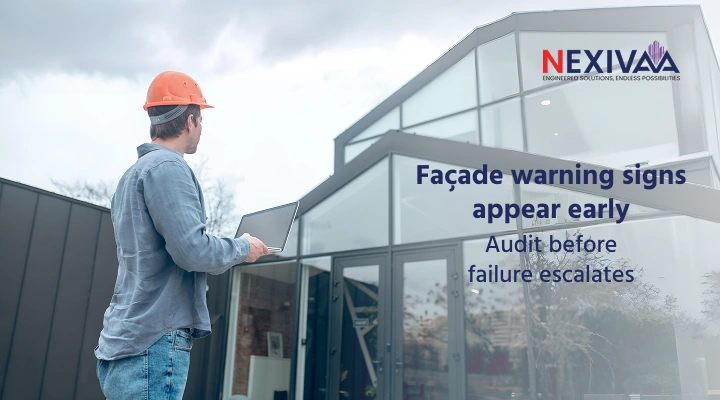
Commercial buildings are long-term assets. Their value, safety, and operational efficiency depend heavily on one critical system: the façade. More than an architectural skin, the façade regulates thermal performance, controls moisture, manages air movement, and protects structural components. When this system underperforms, consequences extend beyond appearance. They impact cost, safety, and lifecycle durability.
A façade performance audit, often delivered through professional façade forensic audit services, is a structured technical evaluation of how the building envelope is actually performing. The need for such an assessment is rarely sudden. Warning signs usually appear gradually. Recognizing them early can prevent expensive remedial work and operational disruption.
1. Recurring Water Infiltration
Water ingress is one of the most common indicators of façade failure. Staining on interior walls, damp insulation, corrosion of metal framing, or sealant breakdown suggest compromised waterproofing.
However, leakage points rarely represent the true source of failure. Moisture may travel through concealed pathways before becoming visible. An envelope forensic audit identifies root causes, whether related to detailing gaps, failed joints, incorrect installation, or system incompatibility.
If temporary repairs are becoming routine, it is time to consult experienced façade consultants for a comprehensive assessment.
2. Unexpected energy performance issues
A commercial building that struggles to maintain stable indoor temperatures may be experiencing façade-related inefficiencies. Poor insulation continuity, glazing failure, air leakage, or thermal bridging can increase HVAC load and operational costs.
Common signs include:
- Inconsistent indoor comfort zones
- Drafts near glazing systems
- Excessive solar heat gain
- Condensation on interior surfaces
Façade forensic audit services evaluate thermal continuity, joint performance, and system integration to restore envelope efficiency.
3. Visible surface distress
Cracks in cladding panels, joint separation, displaced elements, or unusual façade movement are not cosmetic concerns. They may indicate deeper structural stress or inadequate allowance for thermal expansion and wind loads.
An envelope forensic audit examines:
- Anchorage systems and fixing integrity
- Panel alignment and tolerances
- Movement joint design
- Compatibility between adjacent materials
Ignoring visible distress can escalate minor issues into structural risk.
4. Frequent sealant or component failures
Sealants, gaskets, and façade interfaces are critical performance elements. When these components fail prematurely or require repetitive maintenance, it often reflects systemic detailing problems rather than isolated wear.
A commercial building façade expert conducts targeted testing and inspection to determine whether failures stem from incorrect specification, environmental exposure, or installation inconsistencies.
Reactive patchwork may temporarily conceal defects. A structured audit addresses the entire envelope system.
5. Changes in building ownership or refurbishment plans
Before asset transfer, renovation, or expansion, a façade performance audit provides clarity. Understanding current façade condition helps new stakeholders evaluate risk, budget accurately, and plan upgrades strategically.
Façade consultants often support:
- Pre-refurbishment condition assessments
- Compliance verification
- System compatibility analysis for new extensions
- Lifecycle performance forecasting
Without technical evaluation, refurbishment work may unknowingly integrate with compromised façade assemblies.
6. Regulatory and compliance uncertainty
Façade regulations continue to evolve, particularly regarding fire performance and material compliance. Older commercial buildings may not meet current expectations.
If documentation is incomplete or material performance cannot be verified, an envelope forensic audit ensures:
- Fire compliance validation
- Documentation review
- Identification of non-compliant assemblies
- Risk mitigation planning
Proactive auditing reduces liability and enhances safety confidence.
7. Ageing façade systems
Even well-designed façades degrade over time. Sealants lose elasticity, coatings weather, fixings corrode, and glazing performance reduces. Buildings approaching mid-life stages should not wait for visible failure before evaluation.
Periodic façade forensic audit services provide insight into:
- Residual lifespan of materials
- Preventive maintenance planning
- Phased remediation strategies
- Cost forecasting
Early detection supports planned intervention rather than emergency repair.
Why Nexivaa is the right choice for commercial façade performance audits
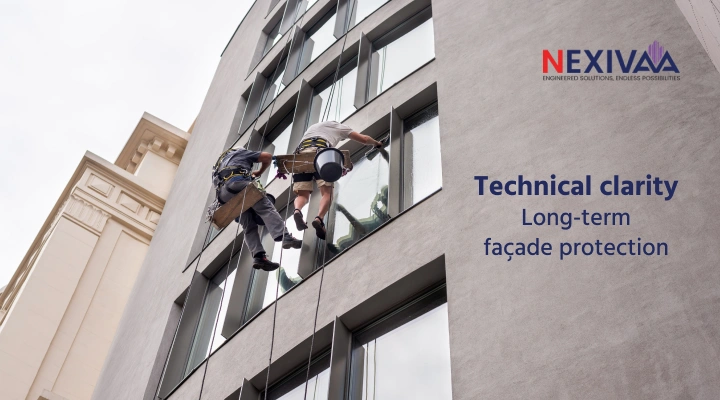
A façade performance audit requires technical independence, cross-disciplinary coordination, and practical field expertise. Nexivaa delivers specialized façade forensic audit services focused exclusively on envelope performance for commercial developments.
As an experienced and trusted façade company, we approach each project through systematic evaluation and engineering validation. Our process prioritizes long-term performance rather than short-term fixes.
Our façade performance audit services include:
- Comprehensive envelope forensic audit assessments
- Detailed façade condition surveys
- Thermal and moisture performance analysis
- Structural anchorage and movement evaluation
- Compliance and fire performance review
- Remediation strategy development
- On-site coordination and technical reporting
Nexivaa acts as a commercial building façade expert, ensuring that recommendations are technically sound, practical to implement, and aligned with long-term asset protection goals.
Is your façade quietly developing risks that could escalate into costly repairs?
Schedule a professional façade performance audit with us today and secure the durability, safety, and efficiency of your commercial building.
FAQs
1. What is included in façade forensic audit services?
Façade forensic audit services include condition assessment, leak investigation, thermal evaluation, structural review, compliance checks, and detailed reporting. The goal is to identify root causes of performance issues rather than address symptoms.
2. How is an envelope forensic audit different from a routine inspection?
A routine inspection is generally visual and maintenance-focused. An envelope forensic audit is investigative and analytical. It evaluates structural behavior, moisture pathways, and system performance through testing and technical analysis.
3. When should a commercial building undergo a façade audit?
Buildings showing water ingress, thermal inefficiency, material distress, or compliance uncertainty should be audited immediately. Even without visible issues, mid-life commercial buildings benefit from proactive evaluation.
4. Can a façade performance audit reduce long-term costs?
Yes. Early identification of defects prevents large-scale remediation, minimizes emergency repairs, and supports strategic budgeting for phased upgrades.
5. Why choose independent façade consultants for an audit?
Independent façade consultants provide unbiased evaluations. Unlike contractors focused on execution, consultants prioritize performance validation and system integrity across the entire building envelope.