The global façade market was valued at approximately USD 234.9 billion in 2023 and is expected to grow to over USD 392 billion by 2030, expanding at a steady CAGR of 7.6% between 2024 and 2030. The growth is driven by the rising demand for high-performance buildings and sustainable architecture.
As cities continue to evolve into vertical skylines, façade design has emerged as a crucial aspect of modern construction, blending aesthetics, functionality, and energy efficiency.
But what exactly is a façade? Why does it matter in architecture? And what are the different types and functions of a building façade? This guide answers all those questions and more.
What Is a Façade?
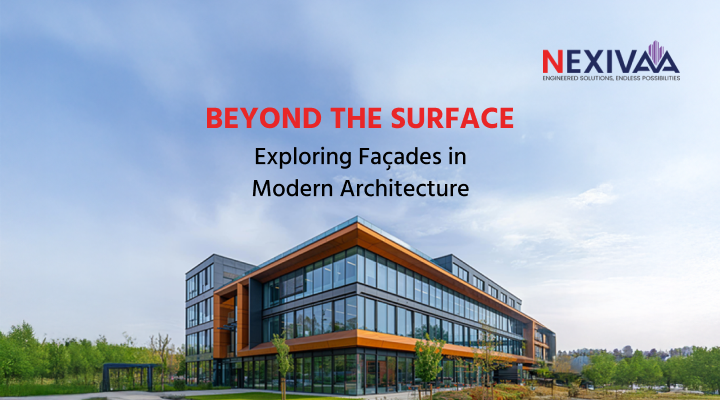
In architectural terms, a façade refers to the exterior face or outer skin of a building, especially the front elevation. It is the visual identity of the structure, the first thing people notice. However, it’s more than just appearance.
Modern façades are engineered to perform multiple roles: protect the building from environmental elements, regulate thermal and acoustic performance, and support structural integrity.
While the term “façade” is often used to describe the front face, today it encompasses all visible external walls that contribute to the building envelope.
Why Is Façade Important?
The façade is where design meets engineering. Here’s why it plays a key role in any construction project:
- Thermal and energy efficiency
Façades help maintain indoor temperature by minimizing heat gain or loss, reducing HVAC loads. - Daylighting and ventilation
Strategic façade design enhances natural lighting and airflow, improving occupant comfort and reducing energy use. - Aesthetic value
Façades define the architectural expression of a building and create visual identity. - Safety and performance
Engineered façades protect buildings from wind, rain, dust, and seismic activity.
With evolving standards in green buildings and smart construction, façade systems now offer integrated performance and sustainability.
Common Types of Façades
Façades are categorized based on material, structural system, and functionality. Here are the most commonly used types in commercial and residential projects:
1. Curtain Wall Façades
A non-load-bearing system attached to the building’s structural frame, curtain wall façades are widely used in commercial skyscrapers and office towers. They typically feature aluminium framing and glass infills, offering transparency, daylighting, and sleek modern looks.
- Advantages
Lightweight, energy-efficient, weather-resistant. - Applications
Commercial high-rises, airports, tech parks.
2. Unitized Façade System
A pre-assembled curtain wall system fabricated off-site and installed in large panels. Unitized systems ensure precision, speed, and quality control during execution.
- Advantages
Faster installation, better site safety, consistent finish. - Applications
Corporate campuses, hotel towers, institutional buildings.
3. Stick System Façade
A traditional curtain wall method where components (mullions, transoms, infill panels) are assembled on site. Although slower than unitized systems, it allows greater flexibility during installation.
- Advantages
Custom adjustments possible during site work. - Applications
Mid-rise buildings, retrofit projects.
4. Double Skin Façade
A system with two layers (outer and inner skin), creating an air cavity for enhanced thermal insulation and acoustic performance. Ideal for energy-conscious architecture.
- Advantages
Excellent climate control, noise reduction. - Applications
LEED-certified buildings, institutional and green buildings.
5. Louvred Façade
Louvres or brise-soleil systems are added to façades to provide solar shading, minimize glare, and add architectural detail. Materials range from metal and wood to fabric and composite.
- Advantages
Controls sunlight, adds aesthetic rhythm. - Applications
Commercial and cultural buildings, shopping malls.
6. Ventilated Façade
This façade type features an air gap between the cladding and insulation layers, enhancing ventilation and moisture control. It’s popular in sustainable construction.
- Advantages
Durable, energy-efficient, reduces condensation risk. - Applications
Residential towers, educational institutions.
Key Functions of a Building Façade
A façade does more than decorate a building; it performs several important functions.
1. Environmental Protection
A primary role of the façade is to shield the building from harsh weather, including wind, rain, UV radiation, and dust. High-performance façades are designed to be airtight, water-tight, and structurally sound.
2. Thermal and Acoustic Insulation
Façades help manage heat transfer and sound transmission, creating a more comfortable indoor environment. This contributes to lower energy costs and better occupant well-being.
3. Natural Lighting and Ventilation
Smart façade systems maximize daylighting and passive ventilation, reducing dependence on artificial systems and improving energy efficiency.
4. Structural Performance
Though not always load-bearing, façades contribute to a building’s lateral stability, especially in high-rise structures. Systems like curtain walls are designed to withstand wind loads and seismic movement.
5. Aesthetic Expression
Façades are the canvas for architectural creativity, the visual identity of a building. With the right façade company, designers can merge performance with personality, transforming a structure into a landmark.
The Role of Façade Contractors and Design Experts
Given the technical complexity involved, façade execution requires specialized façade contractors and consultants. From material selection and wind load calculations to thermal bridging and fire safety, experts work closely with architects, builders, and clients.
A reputed façade company ensures that the final solution is integrated, safe, and aesthetically coherent, all while aligning with performance benchmarks and budgets.
As building envelopes become more advanced, façade systems must meet rising demands in sustainability, performance, and compliance. A well-designed façade can significantly enhance a building’s value, usability, and environmental impact.
Whether you’re planning a new development or upgrading an existing structure, partnering with an experienced façade consultant is key to long-term project success.
Nexivaa: Precision-Engineered Façade Solutions
When it comes to delivering successful façade systems, the right consulting partner can make all the difference. At Nexivaa, we focus on combining architectural vision with engineering precision. With deep expertise in both fenestration and curtain wall systems, we provide end-to-end façade solutions that support clients from concept to completion.
Our core offerings include:
- Façade Consulting & Design
From early-stage design support to detailed engineering drawings, we help align architectural intent with structural performance, budget, and constructability. - Engineering Services
Our team delivers accurate system design, performance analysis, structural optimization, and compliance guidance using modern tools and industry best practices. - Field & Site Services
Nexivaa supports façade contractors with on-site installation assistance, quality audits, and coordination reviews, ensuring that design intent translates into execution. - Manufacturing Advisory
Our deep understanding of fabrication challenges allows us to optimize designs for cost, speed, and local manufacturing capabilities. - Training & Upskilling
Recognizing the evolving nature of façade design and construction, we also run hands-on workshops and knowledge-sharing sessions for professionals and businesses.
Whether you’re a developer, architect, builder, or contractor, working with an experienced façade partner like Nexivaa ensures that your project meets modern performance benchmarks across thermal efficiency, structural safety, aesthetic clarity, and regulatory compliance.
Contact us today to discuss your project’s façade needs and how we can help.